Email Subject Line Examples That Get Opened: The Short Answer
Email subject lines get opened when they are clear, relevant to the recipient and promise a specific benefit or a reason to read now. Cleverness helps only when it serves those three things. A vague or misleading line may win a click but costs trust.

The subject line is the gatekeeper of every campaign. Before anyone sees your design, copy or offer, they see a sender name, a subject and a snippet of preview text. If that trio fails, the rest of the work goes unread. Your open rate is also the first number in the funnel, so a weak line limits everything after it.
The email subject line examples in this article are sorted into four groups of subject line patterns, based on the job each one does:
- Value: benefit-led, how-to, numbered list and direct offer.
- Curiosity: curiosity gap, question, bold statement and story teaser.
- Relevance and trust: personalization, behavior-triggered references and social proof.
- Action: deadline urgency, genuine scarcity, plain request and follow-up reminder.
No pattern works everywhere. A curiosity gap that suits a lifestyle newsletter can feel evasive in a billing notice. Personalization that delights one audience can feel intrusive to another. The right choice depends on who is reading, what you want them to do and what kind of email you are sending, so that is where we start.
How to Choose a Pattern: Audience, Goal and Send Type
Settle three questions before you write a single word.
1. Who is reading?
Email audience segmentation decides what counts as relevant. A new subscriber expects a welcome, while a lapsed customer expects a reason to return. Segment by behavior or lifecycle stage, not just demographics.
2. What one action matters?
Pick one campaign goal: read an article, redeem an offer, confirm an order. Value patterns suit offers; curiosity suits reading.
3. What type of send is it?
- Promotion: can lean on benefit or deadline.
- Newsletter: can use intrigue, since readers opted in.
- Transactional: stay plain and literal.
Patterns That Lead With Value
Value patterns tell readers what they gain before they open. They suit audiences who skim and decide quickly.
Benefit-led
Name the outcome, not the feature. Example: "Cut your weekly reporting time in half." Benefit-driven subject lines work best for product updates and promotions where the payoff is concrete.
How-to
Promise a method. Example: "How to clean your inbox in 10 minutes." How-to subject lines fit newsletters, educational series and content digests, where readers expect to learn something.
Numbered list
A number signals structure and a finite read. Example: "5 checkout fixes for your online store." Use it for roundups and tips, and make sure the email really contains that many items.
Direct offer
State the deal plainly. Example: "20% off annual plans, this week only." Use it for sales and launches, when the discount is the main reason to open.
Each pattern makes a promise. The email body has to keep it.
Patterns That Spark Curiosity and Interest
These four patterns earn attention through intrigue. Each one makes a promise, so the email has to deliver on it.
- Curiosity gap: "The one change that fixed our onboarding." It withholds just enough to prompt a click. It suits newsletters and content-led brands, but feels evasive in billing or account notices.
- Question: "Still sorting invoices by hand?" Question subject lines work when the question names a real problem the reader recognizes. A vague question is easy to ignore.
- Bold statement: "Most welcome emails are too long." A confident claim invites debate. Use it when you can back it up in the body.
- Story teaser: "We almost shut down in 2019." It fits founder notes and case studies, where the narrative is the content.
The risk is shared. If the email doesn't answer the curiosity gap, readers feel tricked and stop opening. Test the line by asking whether the first paragraph pays it off.
Patterns That Build Relevance and Trust
Each of these three patterns tells the reader the email was meant for them. Each needs data, and each can backfire if it uses that data carelessly.
Personalization
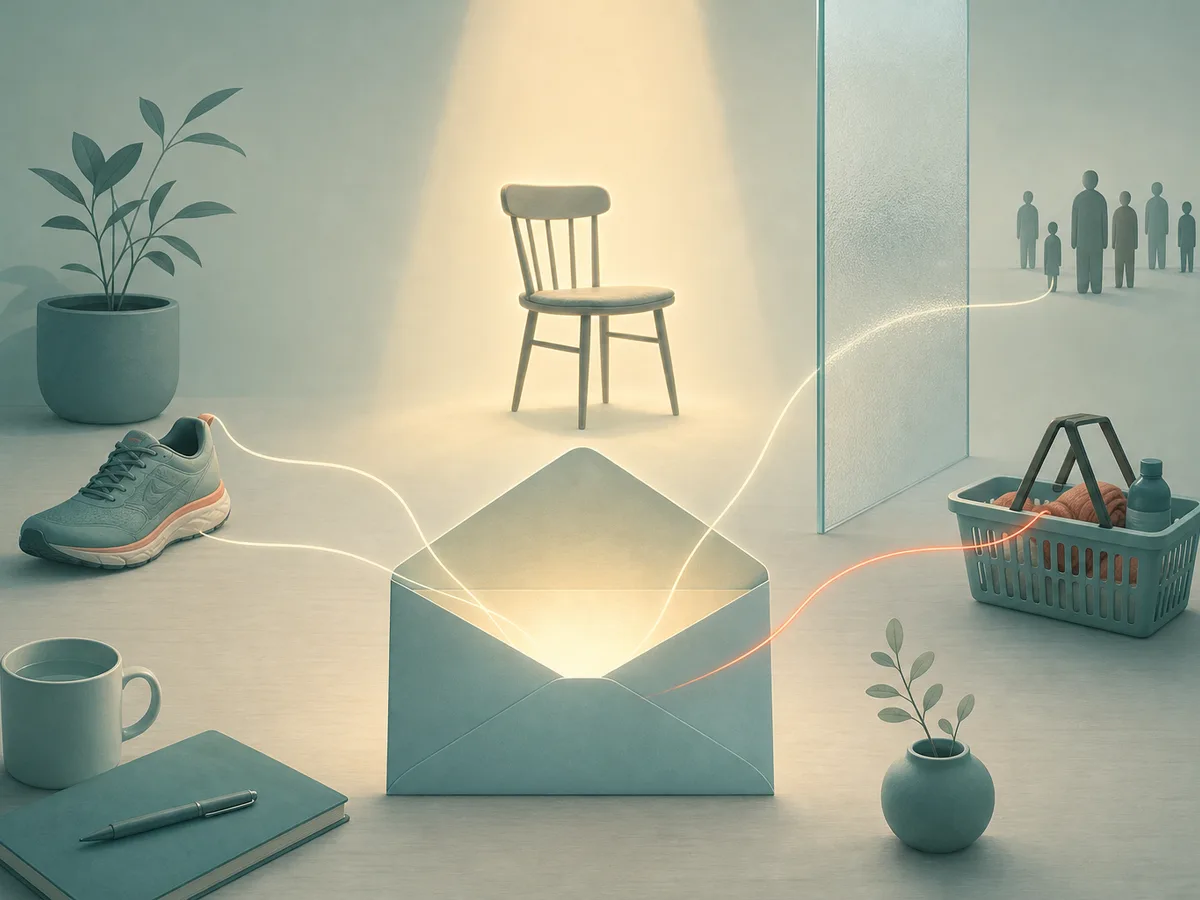
Example: "Maya, your June reading list is ready." It needs at least a first name or a stated preference. Use it where the content really differs by person. A name alone is easily ignored. A reference to their city, plan or interests carries more weight, but it can feel intrusive if the reader doesn't remember sharing that detail.
Behavior-triggered references
Example: "Still thinking about the trail shoes?" Behavior-triggered emails need event tracking, such as views, cart activity or past purchases. They fit abandoned carts, restocks and post-purchase tips. Keep the wording helpful rather than watchful. "We saw you looking at…" can feel like surveillance.
Social proof
Example: "Why 5,000 teams use this planner." It needs a real, current, verifiable figure or customer result. Never exaggerate it.
Patterns That Prompt Action
Action patterns work when the reader already knows what the email offers and needs a reason to act now.
- Deadline urgency: "Your free trial ends Friday." Deadline emails suit sales, renewals and event registrations, as long as the date is real.
- Genuine scarcity: "Only 12 seats left for Thursday's workshop." Use it only when the limit is true, such as capacity, stock or a fixed cohort.
- Plain direct request: "Please confirm your booking." This fits tasks the reader expects, like approvals, surveys or account steps.
- Follow-up reminder: "Still interested in the demo?" Send it after silence, and add something new, such as a shorter ask or a fresh detail.
Honest urgency protects credibility. If a "last chance" email is followed by another "last chance" a week later, readers learn to ignore your deadlines. Use urgency sparingly, and keep every date and quantity accurate. Real deadlines then keep their pull.
Which Pattern Fits Each Type of Email?
Match the pattern to the job the email does, not to what feels fresh.
- Promotional campaigns: direct offer, deadline urgency or genuine scarcity. Use scarcity only when stock or time is truly limited.
- Newsletter subject lines: numbered list, curiosity gap or story teaser. Readers already trust you, so intrigue works if the issue delivers.
- Welcome email subject lines: plain request or benefit-led. Confirm the signup and say what comes next.
- Re-engagement: personalization, a behavior-triggered reference or a direct question. Mention what they last did or ask whether they still want your emails.
- Product announcements: benefit-led or how-to. Lead with what changes for the reader, not the feature name.
Choosing a default
If you must pick one, make benefit-led your default. It is clear, honest and suits nearly every send type. Switch to another pattern only when the email's goal or audience calls for it, and test the change.
How Should You Test Subject Lines and Avoid Common Mistakes?
Start with a simple A/B test: change one variable, split a meaningful sample at random, and pick the success metric before you send.
- One variable: Test pattern against pattern, or length against length, never both at once.
- Sample: Use enough recipients per version that a gap is unlikely to be chance. Small lists may need repeated tests.
- Metric: Opens show the line's pull, but clicks or conversions show whether the promise held.
Log each result, then reuse what you learn.
Mistakes to avoid
- Overlong lines. Subject line length matters because inboxes truncate. Put the key words first.
- Spam-trigger wording. All caps, stacked exclamation marks and "free" in every line can hurt trust and deliverability.
- Clickbait. A line the email doesn't fulfil wins one open and loses the next.
- Ignoring preview text. It sits beside the subject, so make it add a detail rather than repeat the line.